When you purchase espresso and coffee gear through links on Portafilter Datum, we may earn an affiliate commission at no additional cost to you. Learn how Portafilter Datum is funded through affiliate partnerships
Direct-import hand grinders live and die by their physical machining: burr diameter, collar adjustment mechanics, and metal alloy composition. This guide compares three precision steel burr models based strictly on verifiable seller listing claims and legible hardware labels, highlighting adjustment ergonomics, burr geometries, and practical trade-offs.
Quick Selection Path
Choosing a manual coffee grinder depends on whether you prioritize fine-dial espresso adjustment, large burr throughput, or portable counter space:
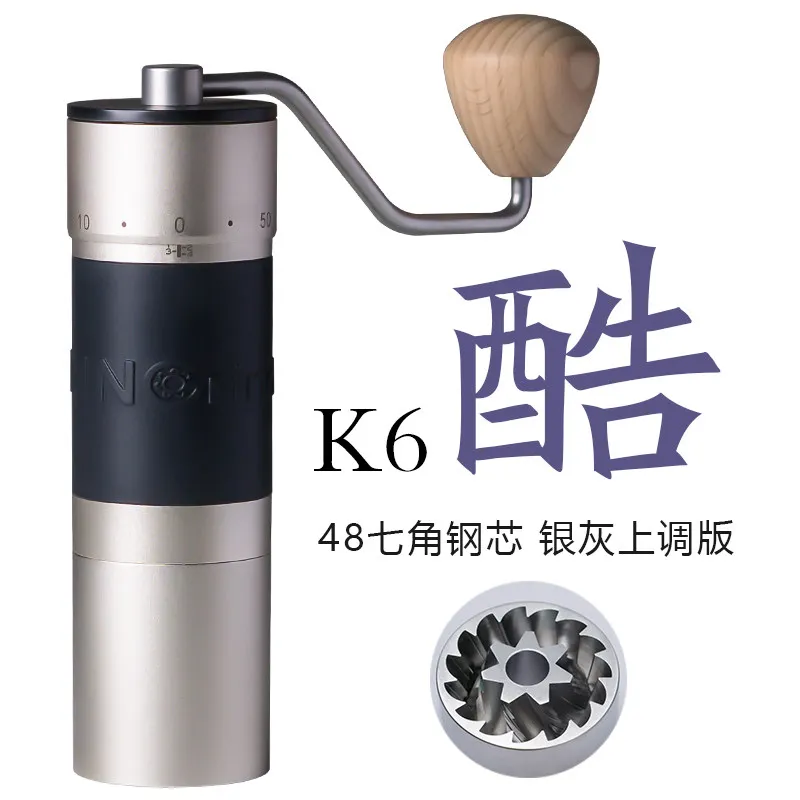
- For wide-range calibration with larger burrs: The Kingrinder K6 lists a 48mm 420-grade stainless steel burr with titanium plating and a top-collar external adjustment ring, catering to users who want rapid zero-point calibration without detaching the catch cup.
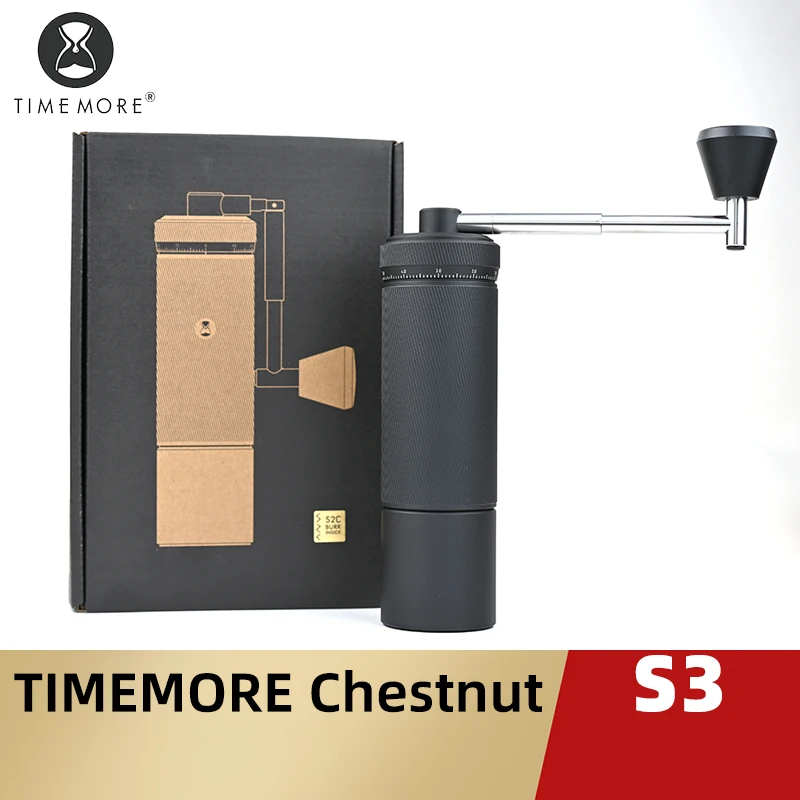
- For calibrated micro-step external adjustment: The Timemore Chestnut S3 advertises an external collar indexed to 0.015mm per click with an S2C890 steel burr, built for espresso-level step resolution and quick external tracking.
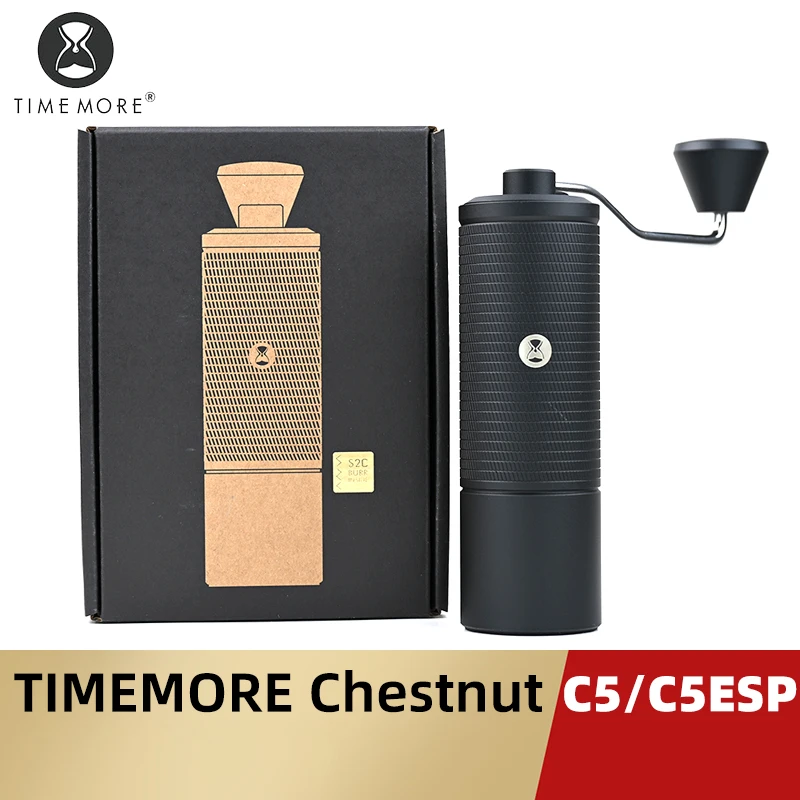
- For compact handling and straightforward dosing: The Timemore Chestnut C5 / C5ESP presents a 42mm S2C burr geometry with a stated 25g bean capacity, offering a lighter, entry-level footprint at an accessible reference price.
Core Comparison Criteria
1. Burr Dimensions and Stated Materials
The internal burr set—known as เฟืองบด (Burrs)—is the primary mechanical wear part of any manual grinder. Burr size directly affects how much surface area cuts whole beans per handle rotation, while alloy coatings influence hardness:
- Kingrinder K6: Claims a 48mm diameter conical burr crafted from 420 stainless steel with titanium plating. Packaging imagery visible on the listing designates a 7-core (七角钢芯) heptagonal geometry.
- Timemore Chestnut S3: Features Timemore’s proprietary S2C890 (Spike-to-Cut) burr profile. The manufacturer emphasizes preliminary bean-cracking spikes before the final shearing edge, though raw dimensional burr diameter is unstated in the listing title.
- Timemore Chestnut C5 / C5ESP: Lists a 42mm S2C burr assembly. While smaller than 48mm sets, the 42mm cut-path allows a slimmer outer barrel, reducing grip fatigue for smaller hands.
2. Adjustment Mechanisms: External Ring vs. Internal Clicks
Adjustment collar placement determines your workflow when dialing in brew ratios:
- External Top Dials: Both the Kingrinder K6 and Timemore S3 place the adjustment ring—วงแหวนปรับเบอร์บด (Adjustment ring)—outside the bean hopper. This avoids removing the grounds bin or exposing hands to retained chaff during adjustments. The Timemore S3 explicitly advertises a nominal micro-pitch step of 0.015mm per click, while the K6 utilizes a numbered collar clearly legible on the upper housing (visible markings 0 to 50+).
- Internal Click Dials: Grinders in the traditional compact category often rely on internal stepped dials situated beneath the lower burr carrier. Buyers considering the Chestnut C5/C5ESP variant should confirm with the seller whether the specific package contains an internal dial orESP micro-plate before purchasing.
3. Stated Capacity and Form Factor
Hopper capacity determines how many doses you can grind consecutively:
- Timemore Chestnut C5: Advertises an explicit 25g capacity, suitable for single-cup pour-overs (standard 15–20g doses) or double-basket espresso charges.
- Kingrinder K6 & Timemore S3: Listing titles do not state fixed gram capacities. However, their larger chassis profiles suggest standard domestic batch capacities. If grinding double batches (30g+) in a single pass is critical, verify nominal hopper volume directly on the seller page prior to ordering.
Technical Specification Comparison
| Attribute | Kingrinder K6 | Timemore Chestnut S3 | Timemore Chestnut C5 / C5ESP |
|---|---|---|---|
| Stated Burr Size | 48mm | Not stated in listing | 42mm |
| Burr Material / Profile | 420 Stainless Steel, Titanium Plating (7-core) | S2C890 Steel Burr | S2C Steel Burrs |
| Adjustment Mechanism | External top-collar dial | External ring (0.015mm/click claim) | Fine adjustment mechanism (variant-dependent) |
| Stated Bean Capacity | Not stated in listing | Not stated in listing | 25g |
| Handle Assembly | Curved handle, wooden knob | Retractable/folding handle | Rigid bent arm, solid knob |
| Reference Price (USD) | ~$129.28 | ~$101.22 | ~$63.17 |
Detailed Product Evaluations
Primary Recommendation: Kingrinder K6
The Kingrinder K6 represents a dedicated solution for brewers who demand expansive burr surface area and quick setting recall. Its 48mm 420-grade stainless steel burrs feature titanium plating, designed to increase surface hardness and resist edge wear over prolonged daily use. The external dial on the upper body provides rapid reference marks, allowing you to move from fine to coarse ranges without disassembling the catch cup.
Fit: Enthusiasts brewing multiple methods (e.g., espresso through filter) who value a visible top adjustment ring and robust 48mm cutter diameter.
Limitation: Exact bean hopper capacity and total unit weight are omitted in the baseline listing data. Buyers should verify batch volume requirements with the seller.
Supporting Alternative: Timemore Chestnut S3
The Timemore Chestnut S3 bridges high-precision external adjustment with compact engineering. Its key mechanical claim is a fine-pitch external ring calibrated to 0.015mm per click, paired with the brand's proprietary S2C890 cutter geometry. Imagery highlights a fold-down crank handle mechanism, making it substantially easier to store on crowded coffee bars or inside travel bags compared to standard fixed handles.
Fit: Users who require granular step resolution for dialing in espresso alongside a fold-down travel-friendly handle.
Limitation: Specific millimeter diameter for the S2C890 burr is not listed in the product title, and nominal chamber capacity is not documented in the listing feed.
Supporting Alternative: Timemore Chestnut C5 / C5ESP
The Chestnut C5 / C5ESP provides an accessible entry point into steel-burr grinding. Fitted with a 42mm S2C cutter set and an explicit 25g hopper capacity, it focuses on compact everyday single-dose brewing. The knurled aluminum-alloy style body ensures a tactile, non-slip grip during manual hand-turning.
Fit: Budget-conscious coffee drinkers seeking a lightweight, portable steel-burr grinder for single-dose pour-over or aeropress routines.
Limitation: The listing covers both "C5" and "C5ESP" nomenclature; internal adjustment plate threading and fine-step tolerances vary between standard and ESP sub-variants. Buyers must confirm which variant is in the cart before purchasing.
Pre-Purchase Checks and Maintenance Considerations
Direct-Import Maintenance Notice: Manual grinders rely on micro-threaded shafts and internal bearing stability. Because replacement parts like spare silicone O-rings, replacement burr sets, and inner spring washers vary by production batch, check with the vendor regarding spare parts availability before completing import purchases.
- Verify Zero Point Alignment: When inspecting your grinder upon arrival, calibrate the zero point (where the burrs touch lightly) before grinding beans to verify manufacturer alignment. Never force the adjustment dial past its mechanical stop point.
- Dry Cleaning Only: Stainless steel burrs and metal carrier bearings should never be submerged in water. Use an air blower or stiff natural-bristle brush to clear static dust and trapped coffee oils.
- Check Sub-Variant Specifics: Listings advertising dual designations (such as "C5/C5ESP") require buyer vigilance. Check whether your selected package includes the standard click plate or the fine-pitch plate intended for espresso calibration.
Listing Source Log
This editorial comparison is compiled entirely from public marketplace listings provided via AliExpress (Stone's Store and Jaffee coffee Store) current as of late 2024 to early 2026 data capture. Specifications such as burr size, adjustment click pitch, and alloy coatings reflect seller claims and packaging labels rather than third-party metallurgical lab tests. Listed prices represent changeable reference figures.
Research basis: This comparison uses the supplied marketplace listing descriptions, stated properties and reference prices. Seller claims have not been independently verified; information missing from this comparison may still be available from the seller. No physical or hands-on testing was performed.